Art feeds art
Du Fu gorges on it like a starving man

Song of the Sword Dance, Watching a Student of Mistress Gongsun Perform
Du Fu

Author's note:
On November 14th, 767 (Dali 2), at the residence of Yuan Chi, Aide to the Governor of Kuizhou, I saw Ms. Li Twelve of Linying perform the sword dance. I admired her skill and artistry, and asked who she had trained with. She said, “I was a student of Mistress Gongsun.” I remembered watching Mistress Gongsun perform the sword dance and the northern reel in the town of Yancheng in the year 717 (Kaiyuan 5), when I was still a child. She was a sinuous dancer, easily the best of her time. Of all who knew the moves, whether the elite of the Spring Dancers, or the Pear Garden Orchestra, or any of the girls brought into the palace to perform, in the early years of the reign of the Emperor of Holy Civil Authority and Godlike Military Strength, Gongsun was the undisputed champion. Today, her silks and fine features are a head of grey hair. Even her students are no longer at the height of their beauty. As soon as I heard about the dancer’s background, I recognised her uniqueness, and overwhelmed by thoughts of the past, I composed this Song of the Sword Dance. There was once a man of Wu named Zhang Xu, who wrote calligraphy in the wild expressive style. He often went to watch Gongsun dance in Ye, and because of her, his brushstrokes became bold and full of emotion. That tells you something about Gongsun.

There was a lady, Gongsun was her name,
Whose dance with swords secured the world’s acclaim.
On the faces of the crowds, despair would show,
Her artistry laid Earth and Heaven low.
Like nine suns shot down by Yi, she flashed,
Like gods in dragon chariots, she dashed,
She opened with the thunder’s rage and might;
She left the stage as oceans’ liquid light.
Unvisited now, pearled sleeves and red-lipped face,
But those she trained inherited her grace.
From Linying, beauty came to serve Baidi,
And danced the tune with verve and energy.
But when I asked and learned your where and whom,
Lost years and memories cast deeper gloom.
Eight thousand ladies served our former lord,
Not one, back then, matched Gongsun with a sword.
But fifty years have passed in the blink of an eye,
Around the darkened throne room, sandstorms fly.
Pear Players gone, like smoke when strong winds blow,
Those girls: your dance is their chilly afterglow.
On Golden Grain tomb mound, full trees have grown,
Outside Qutang’s stone walls, the grasses moan.
The banquet ends, the lively pipes dismiss,
As sure as moonrise, sadness follows bliss.
Where this old man is headed, who can know?
In rough hills, feet blister and troubles grow.


观公孙大娘弟子舞剑器行(并序)
大历二年十月十九日,夔府别驾元持宅,见临颍李十二娘舞剑器,壮其蔚跂,问其所师,曰:“余公孙大娘弟子也。” 开元五载,余尚童稚,记于郾城观公孙氏,舞剑器浑脱, 浏漓顿挫,独出冠时,自高头宜春梨园二伎坊内人,洎外供奉舞女, 晓是舞者,圣文神武皇帝初,公孙一人而已。 玉貌锦衣,况余白首,今兹弟子,亦非盛颜。 既辨其由来,知波澜莫二,抚事慷慨,聊为《剑器行》。 昔者吴人张旭,善草书帖,数常于邺县见公孙大娘舞西河剑器,自此草书长进,豪荡感激,即公孙可知矣。
昔有佳人公孙氏,一舞剑器动四方。
观者如山色沮丧,天地为之久低昂。
㸌如羿射九日落,矫如群帝骖龙翔。
来如雷霆收震怒,罢如江海凝清光。
绛唇珠袖两寂寞,晚有弟子传芬芳。
临颍美人在白帝,妙舞此曲神扬扬。
与余问答既有以,感时抚事增惋伤。
先帝侍女八千人,公孙剑器初第一。
五十年间似反掌,风尘澒动昏王室。
梨园弟子散如烟,女乐余姿映寒日。
金粟堆前木已拱,瞿唐石城草萧瑟。
玳筵急管曲复终,乐极哀来月东出。
老夫不知其所往,足茧荒山转愁疾。
Du Fu just couldn’t stop rhyming. What’s remarkable about this writing is how plainly the scene is set, and how his distinctive, weird word choices stand out all the more for it. Why did the beauty of dance make audiences despair? Why does the rising of the moon symbolise inevitable decline with the passage of time? Just when Du seems to be at his most quotidian, he always reminds you of his strangeness.
As you’re reading, and wondering why this all made Du Fu feel quite so mournful, do just consider this: the sword dance he watched was probably considerably sexier than anything you’ll find online from the buttoned-up modern versions of Chinese dance. The Northern Reel mentioned alongside the sword dance was adapted from a recently imported style of naked dance, which had been banned in 713 by Xuanzong for being too louche. The point of all these dances was to attract the aristocratic men who could offer dancers a permanent living, so they had to get the juices going. Perhaps what really made Du Fu sad was that he suffered a stark reminder that he was no longer a young man!
Funnily enough, I think the thing I like most about this poem is the little idea about the calligrapher from Wu. That recognition that beauty and art in one form enriches the other artforms as well. And perhaps that was what Du Fu was mourning: he had been there for one of the world’s great artistic flourishings, at the height of Xuanzong’s reign, and now it was over. That’s a tough pill to swallow.
Dates: Du Fu is using the Chinese lunar calendar, but these dates can be identified with precision, so I gave them in our Gregorian calendar. The year numbers in brackets are the years in the form Du Fu gives them, going by the reign era. Each emperor usually began a new reign era when he came to the throne, and would choose an auspicious name for it (not the emperor’s name). Over the course of a long reign, new eras would be started whenever the emperor felt the need to renew the spirit. The reign era Dali (“great calendar”) was during the reign of Daizong; Kaiyuan (“beginning origins”) began when Xuanzong came to the throne.
Kuizhou: Near modern Chongqing. Du Fu is writing this poem during the great journey he made after losing his place at court in the wake of the civil war.
Li Twelve: It’s possible this was her real name. Naming childen after their birth order was a reality. Or she may have used her birth order as a stage name, out of modesty.
Linying: In Henan.
Sword dance, northern reel: Each of these dances was performed to a specific tune. The sword dance involved the female dancer putting on armour and dancing in an energetic, martial style, with or without a sword. The northern reel evolved from a Middle Eastern style of dance that involved naked dancers splashing each other in a pool of water. At the start of Xuanzong’s reign, he banned the nudity, but the dance style was adapted to match a tune, and continued to be performed.
Spring Dancers, Pear Garden Orchestra: Performance troupes inside the palace of Xuanzong.
Emperor of Holy Civil Authority and Godlike Military Strength: Xuanzong. One of the many laudatory titles given to him by his fawning courtiers.
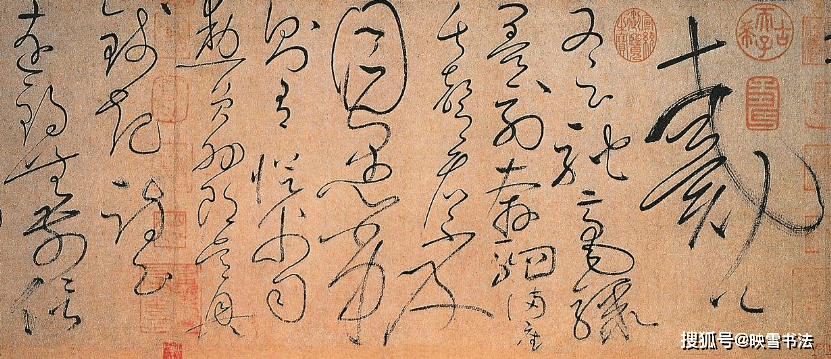
Calligraphy in the wild expressive style:
Nine suns shot down by Yi: The legend of Hou Yi, who shot down nine of the original ten suns because they made the earth too hot to live on.
Baidi: Sometimes translated as White Emperor City, an ancient town and temple on a pinnacle-shaped island in the middle of the Yangtze River near Chongqing.
Sandstorms: The invasion of An Lushan, who rebelled against Xuanzong, and led an army in from the desert northwest to occupy the capital for two years.
Golden Grain tomb mound: The tomb of Xuanzong.
Qutang: Another name for the Baidi. Strictly speaking, it’s the name of the narrow gorge that begins at Baidi, but here Du Fu is just using it as another name for the town.
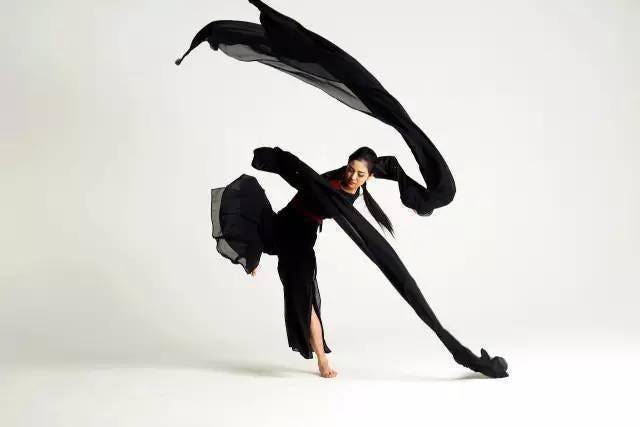
Here’s a modern version of a sword dance:
Here’s the reading from Cinix (he doesn’t read the notes, only the poem):
Phil! You've outdone yourself again!! Normally I'm not a fan of rhymed translations, but you've done such a stirling job here. It captures the majesty of Du Fu's poem by using rhyme along with your trademark rhythmic translations. I like this one much better than Owen's translation!!!